by El Reportero staff
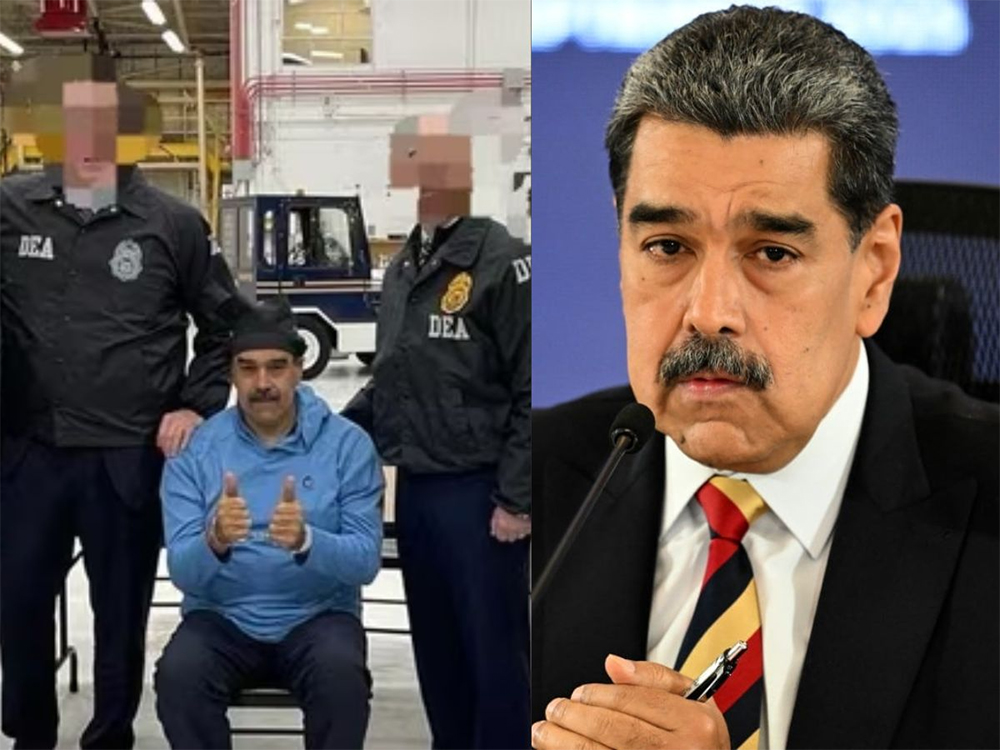
At 10:46 p.m. Eastern Time on Friday night, a short message from Donald Trump set one of the most dramatic military operations in recent U.S.–Latin American history into motion: “Good luck and godspeed.” Within hours, that order launched a massive, tightly coordinated raid that ended with Venezuelan leader Nicolás Maduro in U.S. custody, blindfolded aboard an American warship, and Venezuela’s political future thrown into deep uncertainty.
According to public statements from Trump and Joint Chiefs Chairman Dan Caine, as well as interviews with officials familiar with the planning, the operation had been months in the making. Roughly 150 aircraft were mobilized from more than 20 land- and sea-based locations, while U.S. special forces rehearsed on a full-scale replica of Maduro’s heavily fortified residence. Behind the scenes, the CIA built an extensive intelligence picture of Maduro’s movements, habits, and security protocols.
The night of the operation
Just after midnight, helicopters carrying an extraction team of U.S. special forces and FBI agents flew barely 100 feet above the Caribbean Sea. Overhead, fighter jets, bombers, and drones provided cover, neutralizing air defense systems as the aircraft approached Maduro’s compound. Power to the area was cut, plunging the site into darkness.
As the helicopters entered the target zone, they came under fire. One aircraft was struck but remained operational. At 1:01 a.m., U.S. forces touched down. The team advanced using real-time intelligence feeds from assets on the ground and in the air, closing in on the compound where Maduro was believed to be sheltering.
From Mar-a-Lago, Trump monitored the raid via live video alongside Caine, Secretary of State Marco Rubio, Defense Secretary Pete Hegseth, and CIA Director John Ratcliffe. Trump later said the extraction team faced heavy gunfire but successfully breached resistance and entered the compound.
Maduro and his wife, Cilia Flores, attempted to flee to a steel-reinforced safe room. The team had trained extensively for that scenario, even preparing to cut through reinforced doors if necessary. In the end, force was not required. Both were apprehended before reaching the safe room.
Extraction and aftermath
With Maduro secured, the focus shifted to withdrawal. Additional helicopters arrived as fighter jets and drones provided suppressive fire. Caine described multiple self-defense engagements during the pullout. No U.S. personnel were killed, though Trump acknowledged several were wounded. Venezuelan casualties have not been confirmed.
By 3:29 a.m., the force had cleared Venezuelan airspace over open water. Less than an hour later, at 4:21 a.m., Trump announced the operation’s success on social media. The White House subsequently released an image of Maduro blindfolded aboard the USS Iwo Jima.
Months of preparation
Officials say the groundwork began as early as August, when a small CIA team intensified surveillance of Maduro’s routines. “We knew where he lived, where he traveled, what he ate, even his pets,” Caine said, underscoring the depth of intelligence collected.
Special forces simultaneously trained on a detailed mock-up of Maduro’s residence, complete with steel doors and reinforced rooms. The mission was nearly launched earlier in the week but postponed due to weather conditions.
For much of that period, Trump advisers maintained that the preferred outcome was a voluntary exit by Maduro. Trump himself said he spoke with Maduro multiple times, urging him to surrender. Negotiations stalled when Maduro refused to leave the country, prompting Trump to authorize the operation.
How tensions escalated
The road to Friday’s raid traces back nearly a year. Even before returning to office, Trump signaled that Maduro’s removal was a priority. Pressure escalated through economic and military measures: expanded bounties tied to drug trafficking आरोप, increased naval deployments near Venezuela, seizures of oil shipments, and a renewed embargo.
Rubio’s long-standing opposition to the Venezuelan government and its alliance with Cuba helped shape the administration’s stance. Another key influence was Deputy Chief of Staff Stephen Miller, who pushed for a stronger U.S. military presence in the Caribbean. In the weeks before the operation, senior officials held near-daily discussions refining both military and intelligence planning.
What comes next
While the military execution was precise, political planning remains less clear. Trump said the United States would temporarily oversee Venezuela’s transition, though details remain undefined. Attention has turned to Vice President Delcy Rodríguez, who spoke with Rubio shortly after the raid but later publicly declared Maduro the legitimate president and rejected foreign control.
U.S. forces will remain on heightened alert, officials said, as Washington weighs next steps. The embargo will stay in place, maritime interdictions will continue, and consultations with oil executives are planned to assess Venezuela’s production capacity.
As for Maduro, U.S. officials say he will be transferred to stand trial in the United States, where, in Trump’s words, he will “face American justice.” – With reports by The Frank.