by Wendy Fry
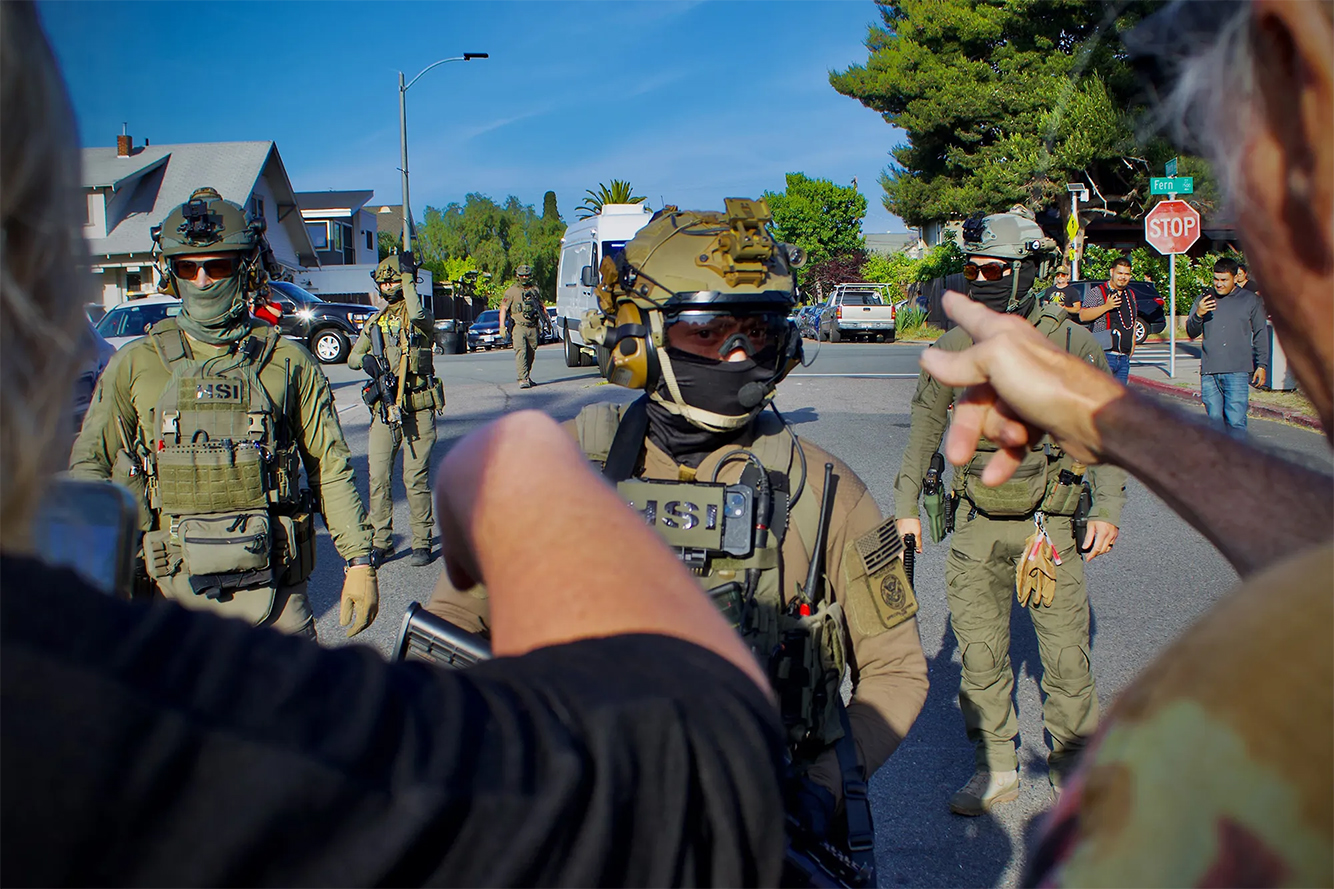
President Donald Trump made California the first testing ground of his administration’s renewed crackdown on unauthorized immigration, sending National Guard troops to Los Angeles and authorizing high-profile enforcement raids across the state. What followed in 2025 turned California into the frontline of a far more aggressive and militarized federal immigration strategy—one whose effects soon rippled nationwide.
Raids on California streets, farms and workplaces, followed by a wave of legal challenges, helped rewrite the practical rules governing how immigration agents operate inside the United States. What began as before-dawn enforcement actions in Central Valley farm towns quickly evolved into a broader federal playbook: surprise workplace raids, neighborhood sweeps, and roving patrols operating far from the southern border. The tactics represented a decisive shift away from border-focused enforcement toward interior operations targeting long-settled communities.
Reporters from CalMatters documented how early practices in Kern County—such as warrantless traffic stops and heavy reliance on appearance-based profiling—spread throughout California and later appeared in other states. Civil rights attorneys challenged these tactics, arguing that they violated constitutional protections. But a series of court rulings, culminating in decisions by the U.S. Supreme Court, largely upheld the government’s authority, reinforcing the legal foundation for expanded interior enforcement.
Early in Trump’s second administration, the federal government also deployed U.S. Marines to the southern border, citing what officials described as a national emergency. That highly publicized deployment, however, proved temporary. Within months, the troops quietly returned home, even as immigration enforcement inside California intensified.
Tensions escalated further when hundreds of National Guard troops were sent to Los Angeles following civil unrest tied to immigration arrests. Trump publicly threatened to extend the deployment to the Bay Area before backing down. California officials objected, calling the move an overreach of federal power, while federal leaders defended it as necessary to maintain order. The standoff deepened long-standing conflicts between California’s sanctuary policies and the White House’s claims of federal authority over immigration enforcement.
The consequences fell most heavily on families with deep roots in the state. CalMatters investigations found that deportations increasingly targeted people who had lived in California for decades, raised U.S.-citizen children, maintained steady employment, and in many cases were actively pursuing legal pathways to remain in the country. Immigration and Customs Enforcement, or Immigration and Customs Enforcement, detained individuals during green-card interviews and routine check-ins—moments previously considered safe under earlier administrations.
Those enforcement changes reverberated through California’s institutions. School districts reported declining attendance as families feared sending children to class. Agricultural employers struggled to fill jobs during peak harvest seasons. Health care providers saw patients delay or skip treatment, worried that hospitals could become sites of enforcement activity.
One federal lawsuit, involving a deaf asylum seeker held for months without proper accommodations, exposed significant gaps in medical care and disability access inside immigration detention facilities. Under Trump-era policy changes, asylum seekers with pending claims lost longstanding protections from arrest, marking a dramatic departure from prior practice. Advocates warned that a new system was emerging—one in which people attempting to comply with immigration rules became easier targets than those avoiding the system altogether.
Detention centers themselves came under growing scrutiny. Local authorities increasingly declined to conduct routine health and safety inspections, citing jurisdictional concerns, while advocacy groups documented deteriorating conditions inside facilities. Reports described overcrowding, delayed medical care, and limited access to legal counsel.
Alongside these visible impacts, a quieter but equally consequential trend took shape: the immigrant population shrank. Love them or hate them, Trump’s immigration policies were achieving one of the administration’s core objectives. Data from the Pew Research Center showed that the national immigrant population declined by roughly 1.4 million people in the first half of 2025—the first sustained decrease in more than 50 years. Economists warned that reduced immigration could slow economic growth, while state leaders weighed long-term consequences for California’s workforce, schools, and social service systems.
Enforcement also became increasingly data-driven. Drone surveillance expanded in urban areas, and immigrant-rights advocates raised alarms about the growing use of artificial intelligence to identify deportation targets. New systems analyzed digital histories, social media activity, and biometric data tied to asylum and visa applications, prompting renewed debates over privacy and due process.
Looking ahead to 2026, California officials expect further expansion of interior enforcement, additional legal battles over sanctuary laws and federal funding, and renewed efforts to increase detention capacity. School districts and major employers are preparing contingency plans for possible mass removals, while lawmakers consider new privacy protections aimed at limiting how personal data can be used in immigration enforcement. Whether those measures can blunt the impact of federal policy remains an open question.
– With reports by El Reportero. This story was shorten to fit space.