by Wendy Fry and Khari Johnson
CalMaaters
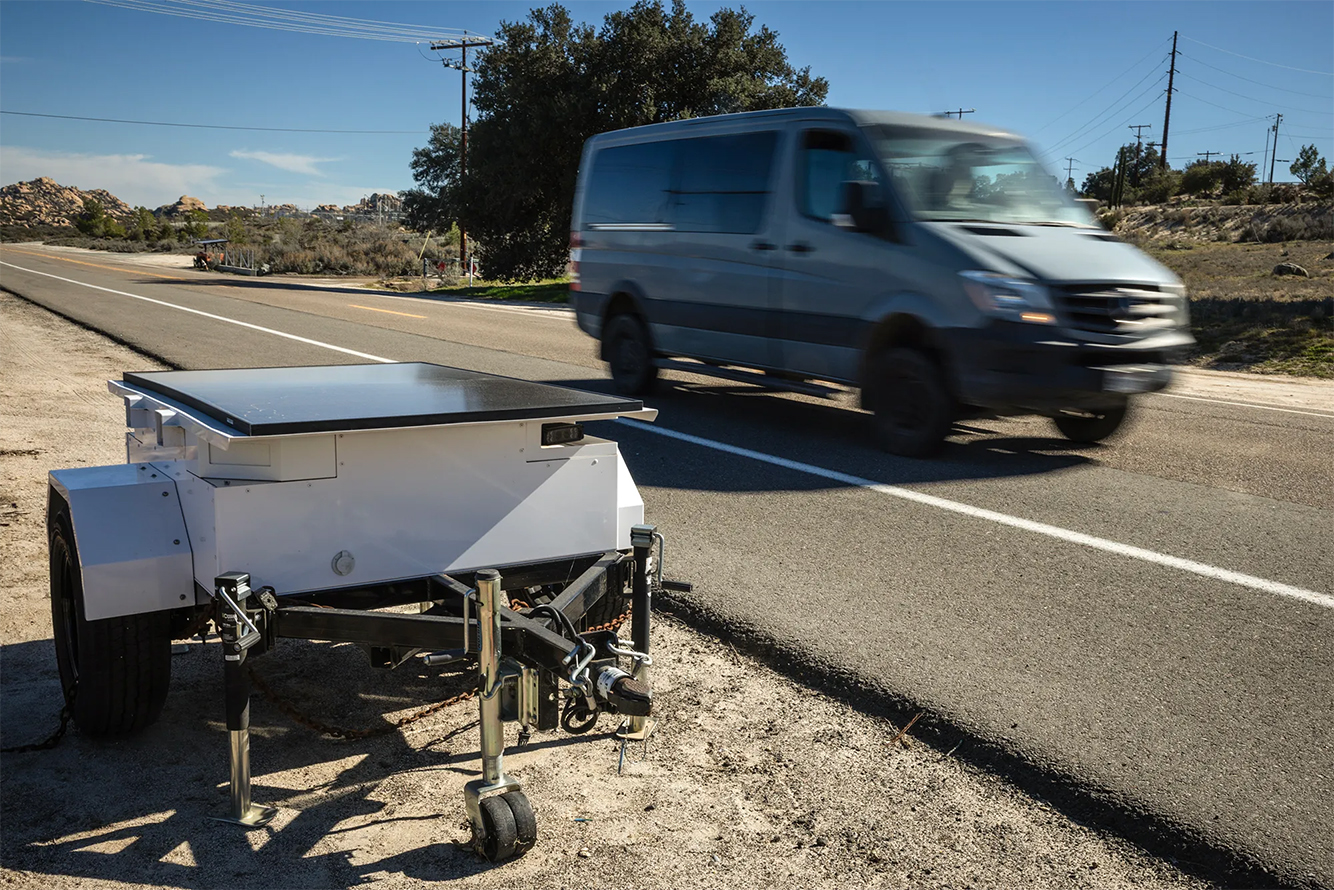
On a quiet two-lane road in eastern San Diego County, James Cordero noticed what looked like an abandoned trailer parked along the roadside. Curious, he stopped to take a closer look and discovered a hidden camera connected to a surveillance network that records the license plates of vehicles traveling through the remote border region between San Diego and Arizona.
Cordero, 44, says he has since located numerous similar devices concealed inside trailers, construction barrels, and roadside equipment along highways in San Diego and Imperial counties. Cameras have appeared near Jacumba Hot Springs, outside the Golden Acorn Casino in Campo, and along Interstate 8 near the In-Ko-Pah Gorge.
The devices began appearing after California granted permits to federal agencies, including U.S. Border Patrol, allowing them to install automated license plate readers (ALPRs) along certain state highways during the final months of the Biden administration. Privacy advocates estimate that more than 40 cameras now operate in the region, feeding data into federal systems.
License plate readers automatically capture images of passing vehicles and record information such as the plate number, vehicle make and model, the state where the car is registered, GPS coordinates of the camera, and the date and time of the image. Federal reports say the photographs may also capture drivers, passengers, and surrounding environments.
Civil liberties advocates argue the technology amounts to mass surveillance of ordinary residents who have committed no crime. Critics say the system collects large amounts of personal data and may conflict with California laws designed to regulate how automated plate readers are used.
“There’s no transparency, that’s the worst part,” Cordero said.
Supporters of the technology say it can help authorities locate suspects involved in serious crimes, identify trafficking patterns, and even locate missing persons.
“If you’re not doing anything illegal, why worry about it?” said Allen Stanks, a longtime resident of Jacumba.
Still, some residents say they have had unusual encounters with federal agents that they believe may be connected to the surveillance system. In one case described by a community organizer, Border Patrol agents questioned his grandmother—who has legal residency—about why she frequently visited a casino in the Imperial Valley.
“She asked them, ‘Is something wrong with that?’” he said. “They said it just seemed suspicious.”
Concerns about the surveillance network have also grown among humanitarian volunteers working near the border. Cordero spends part of his free time helping migrants who cross remote desert areas, leaving water, food, and clothing along migration routes.
He worries the cameras could allow authorities to track volunteers.
“I’m not worried about myself,” Cordero said. “I’m worried about our volunteers being tracked or questioned.”
Earlier this year, the Electronic Frontier Foundation (EFF) and a coalition of civil rights groups sent a letter to Gov. Gavin Newsom and the California Department of Transportation urging them to revoke permits allowing federal agencies to install the devices.
EFF investigators mapped more than 40 cameras along Southern California border roads. The organization argues that the federal surveillance network may be bypassing a 2016 California law that regulates how automated license plate readers can be used.
According to Caltrans, the state transportation agency has approved eight permits allowing federal agencies such as Customs and Border Protection and the Drug Enforcement Administration to install license plate readers within highway rights-of-way. The agency says it does not operate the cameras or control how the technology is used.
Records show that between 2015 and 2024 federal agencies submitted 14 permit applications for surveillance devices in California highway areas. Eight were approved, four were withdrawn, and two did not move forward.
For Cordero, the issue remains personal. While traveling through remote desert areas to check supply drops for migrants, he says he continues to encounter signs of dangerous crossings and, at times, human remains.
Moments like those are why he keeps returning to the borderlands—and why the discovery of hidden surveillance cameras has left him uneasy.
“It took me passing by a few times before I realized what it was,” Cordero said of the trailer camera he first spotted along Old Highway 80.
Editor’s note: This article has been edited and condensed to fit available space.