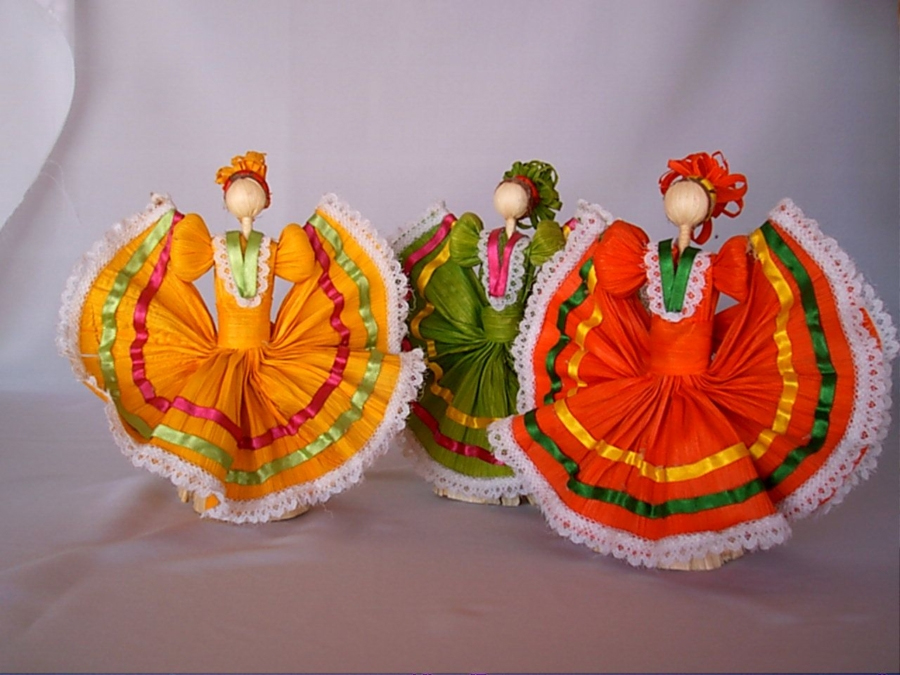
Corn husk dolls are a Mexican craft steeped in symbolism. Discover their origin, production, and cultural value
by Mexico Desconocido
Corn husk dolls are a clear example of how the simplest elements of nature can be transformed into pieces filled with symbolism and beauty.
This Mexican craft, which survives in various communities across the country, is a reminder of popular creativity and how corn remains present not only in the kitchen but also in Mexico’s cultural life.
Origin and Symbolism of Corn Husk Dolls
The use of corn husks to make handicrafts dates back to pre-Hispanic times. Native peoples took advantage of this flexible and abundant material to make both utensils and figures with a ritualistic character.
Over time, the tradition merged with the creation of simple toys for girls and boys, who found in these dolls a form of play and companionship.
Beyond their playful nature, these pieces evoke fertility, life, and a connection to the earth. Like the ears of corn hanging in kitchens, the dolls are also a symbol of cultural continuity.
How are corn husk dolls made?
The production process begins with the collection of dried corn husks, known as totomoxtle. These husks are moistened to make them more manageable and then folded, braided, and tied to shape the dolls’ bodies.
The artisans often use natural fibers or colored threads to tie the pieces and mark details such as the waist, arms, or head. Some dolls are adorned with small dresses also made of dyed corn husks, while others maintain the natural tone of the totomoxtle, highlighting the simplicity of the material.
Each piece can take between one and several hours of work, depending on the level of detail and the decorative finishes added.
Regions where they are preserved
Corn husk dolls are made mainly in rural communities in central and southern Mexico, in states such as:
- Puebla and Tlaxcala, where they are sold at craft fairs and markets.
- The State of Mexico, especially in municipalities with a strong agricultural tradition.
- Oaxaca, where artisans combine them with other plant fibers and natural dyes.
- Michoacán, as part of the artisanal production linked to corn and local festivities.
In all these regions, the dolls are not only tourist souvenirs but also part of community celebrations and traditional offerings.
Dolls with Cultural Value
Today, these crafts have transcended their role as children’s toys to become decorative and collectible pieces. Many families place them on Day of the Dead altars, at corn markets, or as souvenirs from weddings and other festivities.
Their permanence demonstrates that the corn husk, beyond wrapping tamales or protecting grains, also envelops stories, traditions, and memories. In this sense, the dolls are a living testament to Mexican folk ingenuity.