by Marvin Ramírez
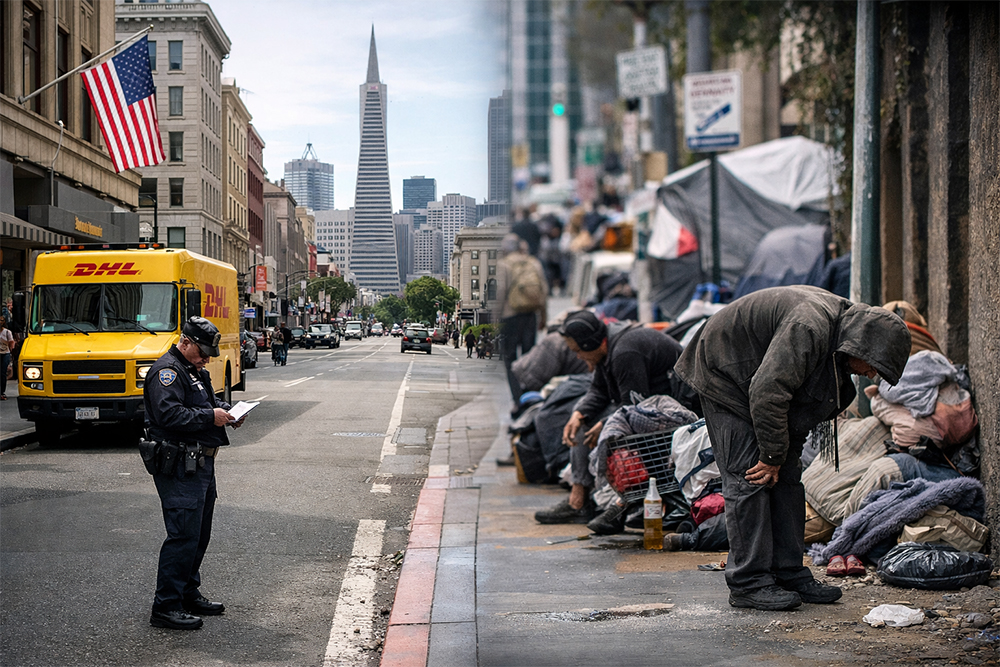
Since taking office, San Francisco Mayor Daniel Lurie has moved with notable urgency to confront one of the city’s most visible and painful realities: disorder on our streets. The results are undeniable. Encampments have been reduced in several corridors, sidewalks look cleaner, and commercial districts that had felt abandoned are beginning to breathe again. For many residents and business owners, this change feels long overdue. It sends a message that the city is no longer willing to normalize chaos, open drug use, and the slow erosion of public space.
Anyone who walks our neighborhoods can see that much of what has plagued our sidewalks in recent years is tied to addiction and untreated mental illness. The arrival of fentanyl did not just add another drug to the mix; it transformed the crisis into something far more lethal and visible. People bent over, frozen in place, trapped in a cycle that robs them of dignity and health. This is not compassion. This is a humanitarian failure. Restoring order is not cruelty; allowing people to waste away in public is.
In that sense, Mayor Lurie deserves credit for acting where others hesitated. For too long, City Hall appeared paralyzed by ideology and fear of political backlash. The public grew tired of being told that nothing could be done. The mayor’s more assertive approach signals a shift: San Francisco is reclaiming its streets, parks, and commercial corridors for families, workers, and visitors. That matters for public safety, for small businesses, and for the city’s image.
But while one hand cleans the streets, the other seems determined to make daily life harder for the very people who keep this city alive. The aggressive elimination of parking across San Francisco — often coordinated with Public Works and backed by state-level policy changes — has become a quiet but devastating blow to residents and merchants. Entire blocks have lost meters, replaced by extended yellow zones or newly restricted corners. Delivery trucks double-park because there is nowhere else to go. Drivers get ticketed for situations that are practically unavoidable. Some drivers even claim that companies “budget for tickets” as a cost of doing business — a sign of how disconnected enforcement has become from reality.
This is not urban planning; it is bureaucratic overreach. Safety improvements at intersections are important, but applying blanket parking restrictions to quiet residential streets where traffic is minimal feels less like safety and more like revenue generation. The removal of longstanding parking spaces has real consequences: customers circle endlessly or give up and shop elsewhere; seniors and families struggle with basic errands; small businesses lose foot traffic. Meanwhile, community leaders who should be raising these concerns too often stand shoulder to shoulder with elected officials, tied together by grants, nonprofit funding, and political alliances. The result is silence where there should be advocacy.
San Francisco is not Paris. It is not Mexico City. Our public transportation system, while vital, does not reach everyone conveniently, nor does it operate with the frequency and reliability needed to replace car travel for most residents. Like it or not, this city — and this country — still runs on cars. Pretending otherwise punishes working people, not policymakers. Congestion during rush hour exists in every major city on earth. That is not an excuse to dismantle access to commercial corridors and neighborhood streets.
Mayor Lurie has shown that decisive leadership is possible. Now he must apply that same courage to the parking crisis. Reevaluate the mass removal of spaces. Restore parking where safety is not genuinely compromised. Put practical measures on the ballot if needed. Economic vitality depends on access. People need to be able to come into neighborhoods, shop, eat, and support local businesses without feeling trapped in a maze of restrictions and fines.
The mayor has begun to clean up San Francisco’s visible wounds. To truly heal the city, he must also confront the quieter policies that slowly suffocate everyday life. Balance, not blind spots, is what San Francisco needs now.