by the El Reportero staff
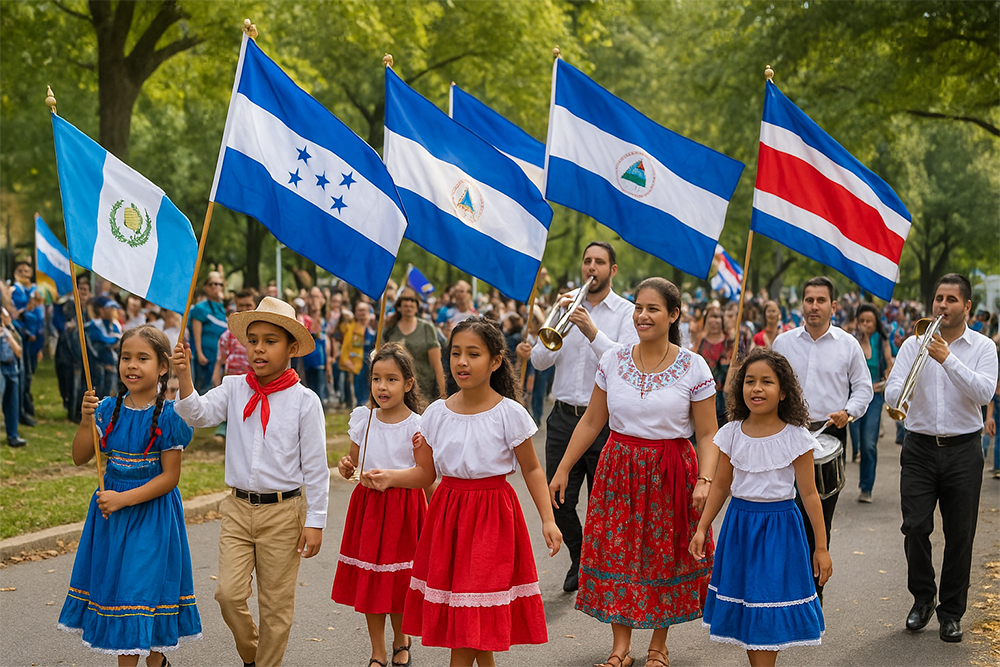
Every year, the month of September is filled with flags, music, dances, and traditions that commemorate the independence of numerous Latin American countries. In particular, September 15 marks a key date for five Central American nations: Guatemala, Honduras, El Salvador, Nicaragua, and Costa Rica, which commemorate their independence from Spain, proclaimed in 1821 in Guatemala City. For Latin American communities in the United States, this commemoration not only commemorates a historical event but also serves as a bridge between cultural heritage and the lives of new generations.
Central American independence emerged after three centuries of Spanish colonization, marked by social and economic limitations imposed on the region’s inhabitants. The 1821 proclamation temporarily united Guatemala, Honduras, El Salvador, Nicaragua, and Costa Rica under the name of the United Provinces of Central America. Although the union dissolved 18 years later, each nation developed its own institutions and traditions, keeping alive the spirit of freedom that began that day. Festivities include civic parades, school ceremonies, flag-raising, traditional music, and typical cuisine—from Salvadoran pupusas to Guatemalan tamales—that evoke cultural identity and allow history to be tangibly experienced.
In Mexico, independence is celebrated on September 16 with “El Grito de Dolores,” the famous ceremony commemorating the beginning of the struggle in 1810 led by Miguel Hidalgo y Costilla. Chile celebrates on September 18 with “Fiestas Patrias,” featuring parades, ramadas, folk music, and traditional foods. Other countries, such as Costa Rica, also have dates close to September, turning this month into a vibrant calendar of patriotic symbols for the entire Latin American community. In U.S. cities with large Latino populations—such as Los Angeles, Houston, Miami, New York, Chicago, and San Francisco—the festivities adapt to a multicultural environment, organizing community events, cultural fairs, concerts, parades, and school competitions, where children learn about history and culture while enjoying the celebration.
For young Hispanics born in the United States, these festivities go beyond a civic event or a parade. They are an educational tool that allows them to learn about the history of their countries of origin, the heroes who fought for independence, and the values that inspired their freedom. Parents, grandparents, and teachers play a fundamental role, passing on stories, songs, dances, and recipes that might otherwise be lost over time. Thus, commemorative events become a living learning experience about history and culture, strengthening young people’s identity and sense of belonging.
Each Central American country has its own unique traditions. In Guatemala, a school flag parade and marching bands mark the day, while in Honduras, civic events are held with patriotic speeches and painting and poetry contests in schools and communities. El Salvador stands out for its school parades and folk dance performances. Nicaragua organizes marching bands, official events, and cultural festivals that include traditional foods and games. Costa Rica, although smaller, celebrates with school ceremonies and public events that commemorate independence and promote historical education from an early age.
The independence celebration also strengthens the bond between the different Latin American communities in the U.S. It is common for events to bring together Guatemalans, Salvadorans, Hondurans, Nicaraguans, Costa Ricans, and Mexicans, creating spaces for cultural exchange where music, cuisine, and traditions are shared. This strengthens community ties and allows young people to feel part of a larger community, appreciating the diversity of histories and cultures that converge in a single country.
Furthermore, preserving these traditions in the United States is an act of cultural resistance against homogenization. Teaching children and grandchildren about their countries’ origins, independence heroes, and cultural richness ensures that historical memory remains alive. Every parade, school event, or community festival is an opportunity for young people to recognize their roots, develop pride in their heritage, and share their history with new generations.
Independence celebrations in the United States also provide visibility for the Latino community. Local media, municipal governments, and schools often cover these events, showcasing the region’s cultural richness and fostering respect and understanding of diversity.