by the El Reportero‘s staff
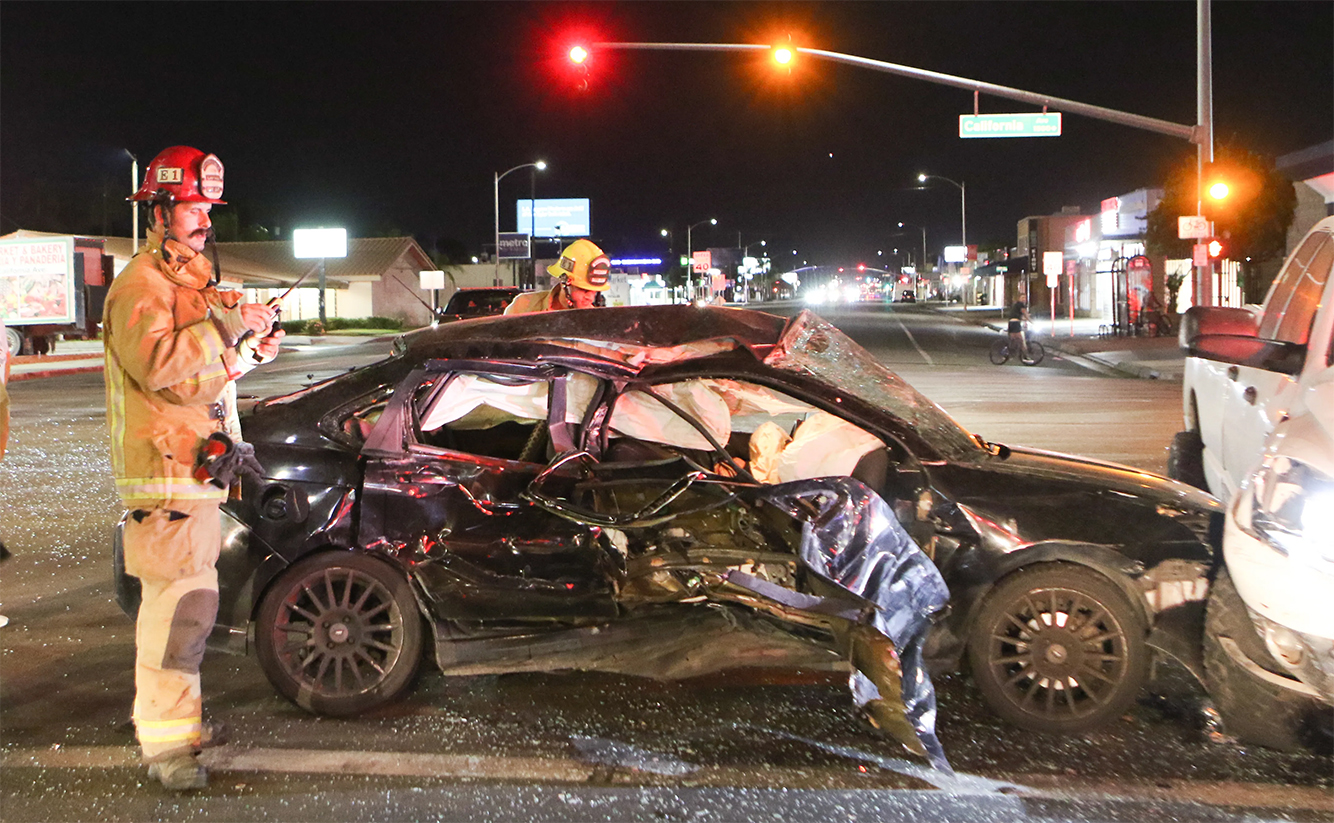
A CalMatters investigation reveals that California’s system for DUI enforcement is broken. The state’s laws are now among the weakest in the country, contributing to a sharp increase in alcohol-related roadway deaths.
The system routinely allows repeat drunk and drugged drivers to remain on the road with minimal punishment until they cause fatal crashes.
The human toll and fatal leniency
Alcohol-related roadway deaths in California have shot up by more than 50% in the past decade, an increase twice as steep as the rest of the country. Over 1,300 people die each year in drunken collisions.
The stories of repeat offenders escaping justice are tragic and common. Sylvester Conway, despite two prior DUI convictions, was repeatedly arrested for drunk driving between 2019 and 2021. He accumulated three open cases and multiple warrants for skipping court.
In February 2022, Conway sped while drunk, lost control, and killed his passenger, Khayriyyah Jones. He is now facing murder charges.
Another victim, Sarah Villar, was killed in 2021 by a driver who had three prior misdemeanor DUI convictions in consecutive years. That driver had served only a couple of weeks behind bars for the prior offenses.
Villar’s father, Dave Villar, publicly condemned the lack of consequences, stating in her eulogy: “To the broken justice system that allowed this to happen — shame on you… Our system says it’s after the last [shot].”
The case of Masako Saenz and her son, Manuel, highlights the decades-long failure. Manuel, five, was killed in 2000 by a driver who had his fourth DUI conviction just two months earlier. The driver was out of jail at the time, finishing a rehab program.
At the arraignment, Saenz broke down, screaming: “Murderer! Murderer! You killed my son!” She later reflected on her grief, saying: “They have no idea. They have no idea. Sometimes even now I wonder if I can go on.”
Tragically, in 2022, Masako Saenz herself was killed by a different drunk driver, Puentis Currie Jr., whose license was suspended. The driver who killed her received only three months in jail and was later caught driving on a suspended license again, receiving just a ticket.
Currie, now 25, reflected on the ubiquity of drinking and driving, stating: “I think it’s accepted in society until the worst happens.”
David Alvarado, another repeat offender, had three prior DUIs that did not count toward a felony charge because California’s 10-year look-back period had expired. He was arrested for DUI three more times between 2019 and 2021, yet received only probation and a 129-day alcohol monitoring bracelet.
Less than a year later, while driving drunk, he killed Mary and Paul Hardin. Their son, Benjamin Hardin, stunned by the driver’s history, said: “It really does feel like it is literally just a matter of time before they kill someone — or in my family’s case, two someones.”
Similarly, William Curtis, after a DUI in 2012, received a second DUI and accumulated numerous tickets and collisions—all while his license was suspended. He continued to drive until November 2020, when his crash killed Dominique Howard.
Law enforcement later heard Curtis tell his mother on the phone: “I killed someone. I’m going away. I’m sorry, mom. Tell my kids I love them.”
Weak laws and political inertia
The investigation points to several critical flaws in state law. California maintains a high felony bar: drivers generally cannot be charged with a felony until their fourth DUI within 10 years, unless they injure someone.
The short ten-year look-back period is a major loophole, ensuring DUIs drop off a driver’s record after a decade. This allows drivers with numerous old convictions to be charged only with a minor misdemeanor.
The state’s classification system also creates sentencing gaps. Drunk vehicular manslaughter is not considered a “violent felony.” Prosecutors noted this twisted state law means a drunk driver who causes “great bodily injury” (such as a broken leg) can potentially face more time behind bars than a driver who kills someone.
California is also lenient with license revocation, typically suspending a license for only three years after a third DUI. This is significantly shorter than in other states like New Jersey (eight years) or Connecticut (permanent revocation). Drivers with up to six DUIs have been able to get their licenses reinstated.
Despite the mounting death toll, state leaders have shown little willingness to adopt effective countermeasures. A bill proposed this year to expand the use of mandatory in-car breathalyzers (Ignition Interlock Devices, or IIDs)—which research proves can significantly reduce drunk driving—was killed. The California Department of Motor Vehicles (DMV) opposed the provision, citing a lack of time and resources.
Adding to the problem, law enforcement efforts are decreasing. DUI arrests statewide have dropped from nearly 200,000 in 2010 to 100,000 in 2020.
A past success
California has a historical precedent for success. In the 1980s, the tragic death of Candace Lightner’s daughter led to the founding of Mothers Against Drunk Driving (MADD).
This movement galvanized state leaders to enact tough new laws, which then resulted in California cutting alcohol-related roadway fatalities by more than half in the following decades.
Now, the state is reversing course. The lack of consequences over time makes fatal crashes often seem like a “tragedy foretold.”
– With reports by Robert Lewis and Lauren Hepler. This is a shorten version of the original.
– To read the complete piece visit: https://calmatters.org/investigation/2025/10/california-dui-failure/