Culturally inspired new dishes to be implemented in cafeterias statewide
Berkeley, Calif. – Just in time for Farm to School Month this October, California school districts are celebrating the diversity of students’ palates with the “California Flavors” campaign. The Center for Ecoliteracy’s California Food for California Kids® program is introducing new delicious and nutritious culturally inspired dishes—featuring the abundance of California’s fresh fruits and vegetables—to its network of 160 member school districts serving 2.4 million students across the state.
“School cafeterias sit at a crucial intersection of food, culture, health, and the environment, making them powerful places for learning,” said Alexa Norstad, Executive Director of the Center for Ecoliteracy. “When students see their cultural heritage reflected in school meals, they feel recognized and valued as part of their community. And when they are introduced to new dishes, they not only discover fresh flavors but also gain a deeper appreciation for the cultural diversity of their peers.”
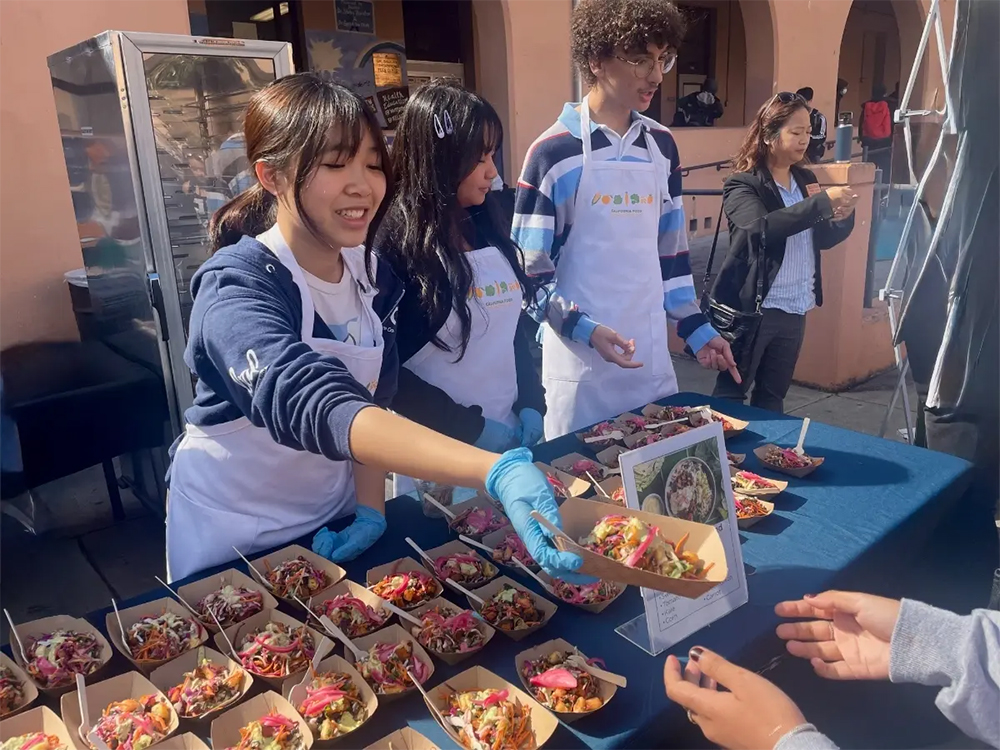
From the vibrant and bold flavors of Latin America to Asian street food and Middle Eastern spices, the “California Flavors” campaign is adding plant-based recipes to school cafeteria menus throughout this school year. Developed with student input, these culturally inspired recipes reflect the rich diversity of California’s student population while meeting new nutrition standards to reduce sodium and sugar. Some of the new menu options include:
• Mango and Carrot Lassi
• Vegetarian Pupusas with Cabbage Curtido
• Marinated Fish and Fried Rice Bowl
• Korean Street Sandwich
• Baked Pancit
• Pozole
• Za’atar Lentils and Chickpea Falafel Burger
• Aloo Masala Wrap with Rainbow Salad
• Middle Eastern-Style Steak Bowl
“As we focus on expanding our farm-to-school program to feed more students with fresh, local produce, partnerships like this are invaluable,” said Jennifer LeBarre, Executive Director of Student Nutrition Services for the San Francisco Unified School District (SFUSD). “When students have access to nutritious, fresh, and familiar meals, they not only feel better but also play better and learn better. Optimizing procurement practices through a farm-to-school program, while adding culturally relevant meals, is a huge step forward for the student experience.”
With these recipes, the Center for Ecoliteracy makes it easier for school nutrition departments to incorporate California-grown fruits and vegetables into menu dishes that excite students to eat them. Tasting events will be held across the state this month, giving young people the chance to share feedback on which dishes should be served in school cafeterias.
California was the first state in the nation to provide universal school meals for all public school students from transitional kindergarten through 12th grade, ensuring free breakfast and lunch for all students regardless of socioeconomic status. Data shows that student participation in California’s free School Meals for All program is projected to reach one billion meals served during the 2025–2026 school year.