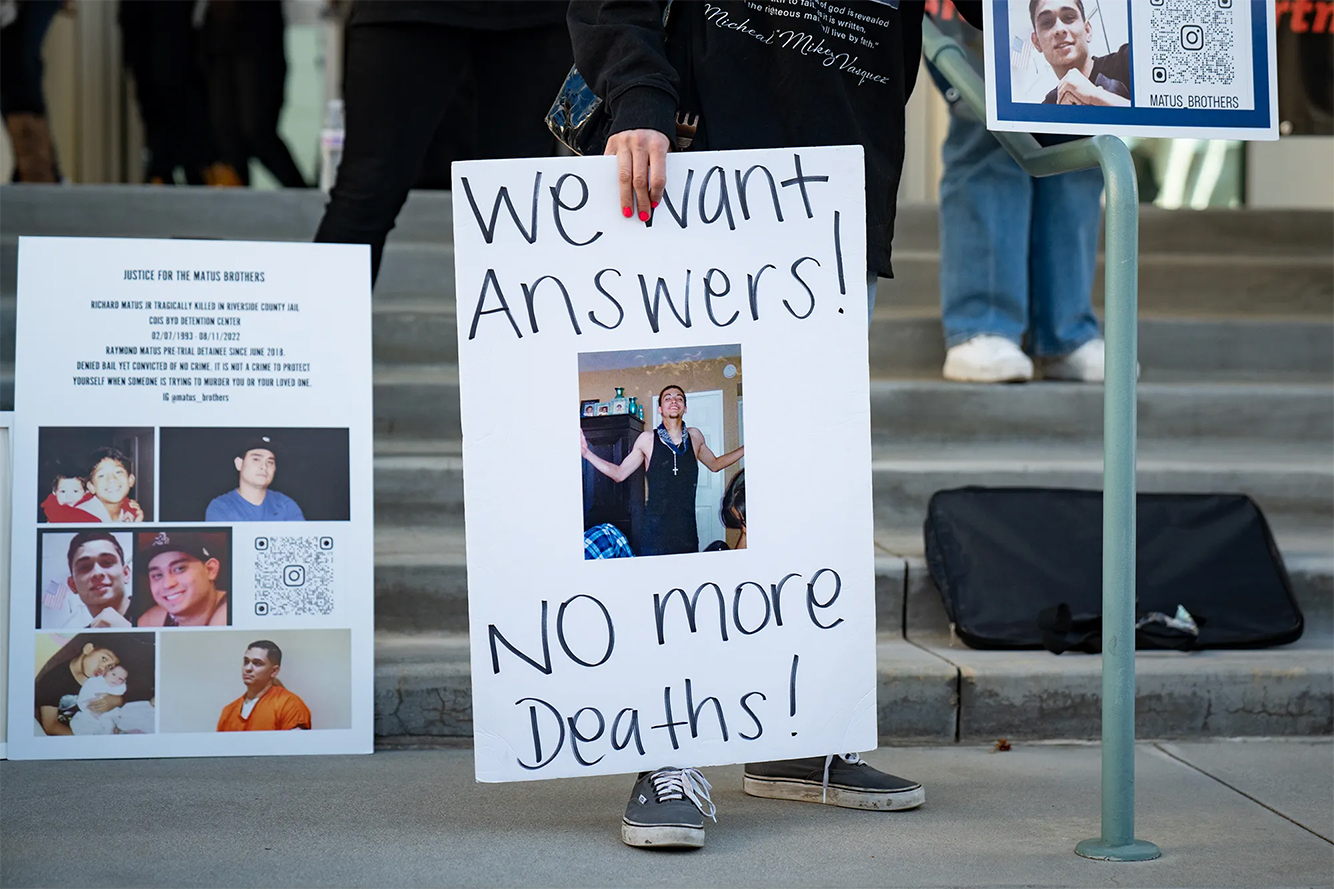
by the El Reportero staff
Based on reporting and analysis by David Myers
Nearly a year after California launched a new statewide office to review deaths in county jails, the agency has not completed a single case review, raising questions about the effectiveness of a law that state leaders said would bring accountability and transparency to in-custody deaths.
The In-Custody Death Review Division was created under Senate Bill 519 (https://leginfo.legislature.ca.gov/faces/billTextClient.xhtml?bill_id=202320240SB519), authored by then–state Sen. Toni Atkins (https://sd39.senate.ca.gov/) and signed into law in 2024. The legislation was promoted as a response to long-standing concerns that county sheriffs were effectively tasked with investigating deaths occurring in facilities they operate, a structure widely criticized by civil rights advocates and families of people who died in custody.
Under the law, the state office is authorized to collect records from county agencies, analyze deaths in local jails and issue recommendations aimed at preventing future fatalities. Supporters of SB 519 said the measure would introduce independent oversight and consistent statewide standards. However, according to information reviewed by El Reportero, the division has yet to finalize any reports since the law took effect.
Experts and former law enforcement officials say structural limits built into the legislation may help explain the lack of progress. The office can request records and propose changes, but it does not have authority to compel counties to turn over documents within set deadlines or to impose penalties if agencies delay or refuse to cooperate. As a result, reviews can stall when local departments are slow to provide information.
In several California counties, the sheriff also serves as the coroner, the official responsible for determining the cause and manner of death. That arrangement has drawn scrutiny because it places responsibility for jail operations and death determinations within the same office. While SB 519 acknowledged concerns about conflicts of interest, the law did not prohibit sheriffs from retaining both roles.
The California Attorney General’s Office (https://oag.ca.gov/), which is responsible for enforcing state law, has not announced any formal actions against counties that fail to meet the expectations outlined in SB 519. State officials have said the review division is still in the process of building staffing and procedures, but critics note that the lack of enforceable deadlines reduces pressure on local agencies to prioritize cooperation.
California has faced previous challenges with oversight of jail deaths. In San Diego County (https://www.sdsheriff.gov/), a local review body fell behind in its workload and ultimately dismissed numerous cases without completing substantive reviews, according to public records. Advocates warn that similar backlogs at the state level could lead to years-long delays in accountability.
Families of people who die in custody have repeatedly called for timely, independent investigations and public reporting of findings. Law enforcement unions and county officials, meanwhile, have argued that records requests can be complex and that agencies must balance transparency with privacy protections and ongoing investigations.
State lawmakers who supported SB 519 have said they remain committed to improving oversight and may consider adjustments if the current framework proves insufficient. Policy analysts note that potential changes could include enforceable timelines for document production, clearer limits on redactions and a defined escalation process when counties do not comply with requests from the state office.
For now, the absence of completed reviews underscores the gap between legislative intent and on-the-ground implementation. Whether California’s new oversight system can fulfill its promise will likely depend on whether state leaders strengthen the law’s enforcement mechanisms and provide the resources and authority needed to ensure that reviews move forward.
– David Myers is a former commander and 33-year veteran of the San Diego County Sheriff’s Department.