Analysis | By Marvin Ramírez
In San Francisco and across the Bay Area, city policies are increasingly hostile to private drivers. Red zones are expanding, curbside parking is vanishing, and parking enforcement is intensifying. At the same time, a surge in new apartment construction is bringing hundreds of new housing units—without providing enough parking for all the people who live in them.
The outcome is frustratingly familiar: working residents return home after long days only to find no place to park. Forced to gamble on restricted zones, many end up with tickets that eat into already tight budgets.
This isn’t accidental—it appears intentional.
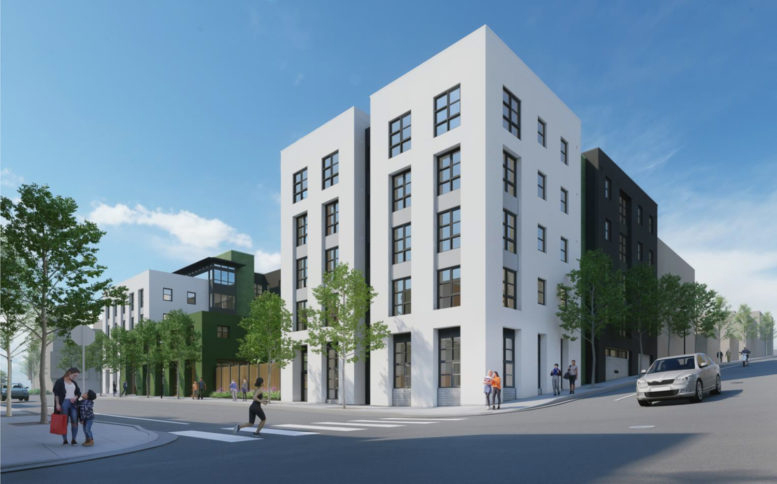
A clear example is found in Hunter’s Point, a rapidly changing neighborhood in the southeastern corner of San Francisco. Part of the larger Bayview–Hunters Point district, this area is experiencing major redevelopment, with new residential buildings rising on sites once used for industry and shipping. Many of these buildings do include parking—but not enough to meet demand, leaving many tenants dependent on public streets.
The neighborhood covers ZIP code 94124, with streets like Friedell, Innes, and Quesada now dotted with new developments. It’s bounded by Third Street to the west, the Bayshore Freeway and Candlestick Point to the east, and the bay to the south. Though marketed as “transit-oriented,” many residents find public transportation too limited—especially at night or for those juggling multiple jobs.
“My building has 45 units and maybe 18 parking spaces,” said Rosa Aguilar, a tenant on Innes Avenue. “If you don’t get one, good luck. You’re out on the street hunting for a spot every night—and they’ve added more red and white zones where you used to be able to park.”
State laws like AB 2097, passed in 2022, prevent cities from requiring parking minimums for buildings near transit. This has encouraged developers to reduce or limit garage space to save costs, often under the logic that fewer parking spots will encourage greener habits. In reality, it just shifts the pressure to street parking—and then fines people for using it.
The San Francisco Municipal Transportation Agency (SFMTA) has painted more curbs red, turned former meter spots into loading zones, and increased enforcement citywide. New daylighting rules under AB 413 are removing thousands of legal spaces by banning parking near crosswalks. Officials estimate 13,775 spaces may be eliminated citywide.
Red-zone violations alone now average 1,200 tickets per month—and climbing.
“They know people have no choice,” said Ángel Méndez, who lives near Quesada Street. “Not everyone got a garage spot, and now even the corners where we used to park are off-limits. But if you park there, it’s a $108 ticket. Every week.”
City planners, including SFMTA Director Jeffrey Tumlin, insist these changes are about safety and long-term sustainability. “We’re redesigning our streets to support alternatives to car dependency,” he’s said. But many residents argue that those alternatives don’t yet exist—or don’t work for people with real-world schedules and responsibilities.
On Zillow, housing.sfgov.org, and PropertyShark, listings in Hunter’s Point proudly advertise “limited parking” while highlighting modern amenities and waterfront views. But tenants who didn’t win a garage spot face a daily battle for curb space that’s becoming more restricted—and more expensive.
What’s emerging is a troubling pattern: build housing, provide partial parking, then redesign the curb so that remaining options disappear—only to enforce them aggressively.
“We thought we were getting affordable housing,” said Aguilar. “Instead, we’re paying with stress and citations.”
Unless the city addresses the gap between planning theory and the daily needs of its residents, its current approach risks deepening inequality. Drivers aren’t being pushed toward better choices—they’re being pushed into a trap.