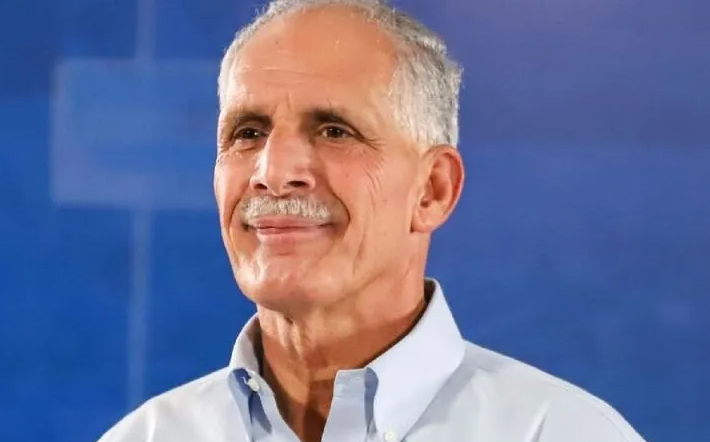
Libera Party candidate Salvador Nasralla is in second place with 1,073,931 votes
by the El Reportero‘s wire services
Presidential candidate of the National Party, Nasry Asfura, has once again moved into the lead in Honduras’ vote count after having been surpassed for several hours by Liberal Party candidate Salvador Nasralla, according to the latest figures released by the National Electoral Council (CNE) and reported by local media outlets.
With 84.4 percent of the polling stations counted, Asfura has secured 1,081,965 votes, representing 40.04 percent of the total. Nasralla follows closely with 1,073,931 votes, equivalent to 39.76 percent. The margin between the two remains razor-thin, reflecting one of the closest presidential races in the country’s recent history.
In third place is the candidate of the ruling leftist Liberty and Refoundation Party (Libre), Rixi Moncada, who has received 517,696 votes, or 19.16 percent. Moncada reiterated her allegations this Wednesday of what she calls an “electoral coup” underway in the country. In statements to TeleSUR, she claimed there is foreign interference in the process and directly pointed to U.S. President Donald Trump.
Since the closure of polling stations on Nov. 30, the Honduran public has remained on edge as final results have yet to be confirmed. Throughout the counting process, the margin between the two leading candidates has been so narrow that at certain moments the difference shrank to just 300 votes.
Asfura, who has received explicit backing from Donald Trump, initially led the preliminary count. Last Friday, the U.S. president issued a direct warning to Honduras, stating that if Asfura did not win, the United States would stop providing financial support to the country, arguing that the “wrong leadership” could bring “catastrophic” consequences.
Elections marked by political tension
- More than six million Hondurans were called to the polls to elect the country’s next president.
- In addition to the presidency, voters also elected 128 members of Congress, 20 representatives to the Central American Parliament, 298 mayors along with their deputy mayors, and 2,168 city council members.
- The election was preceded by a tense political climate. The government warned of an alleged opposition plot to destabilize the country, while opposition parties accused the ruling party of attempting to manipulate the results to prevent the defeat of its candidate.