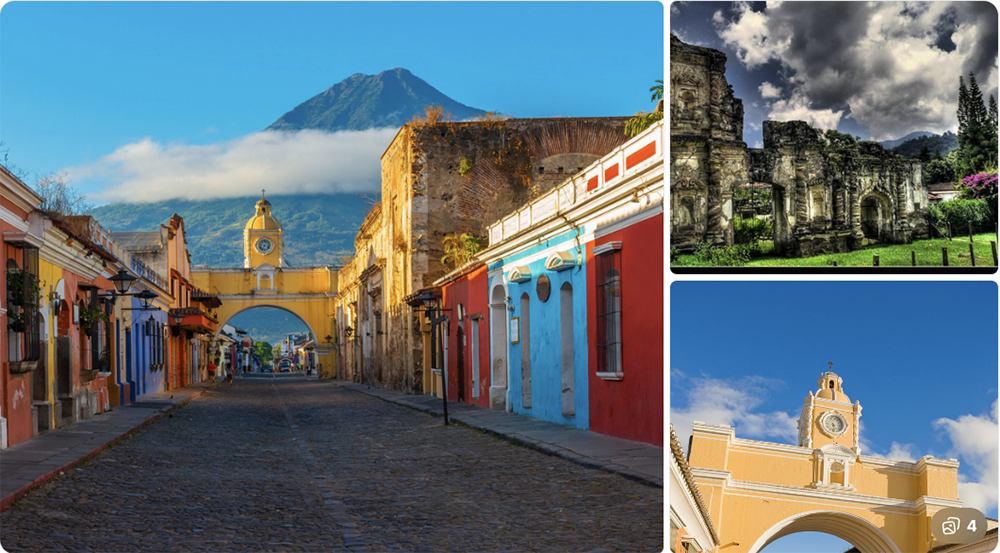
by the El Reportero staff
Antigua Guatemala is a city forged by catastrophe and renewal. Formerly known as Santiago de los Caballeros de Guatemala, it ranked among the most important urban centers in colonial Latin America. A series of powerful earthquakes—most notably those of June and July 1773, remembered as the Santa Marta earthquakes—reduced the city to ruins. Palaces, churches, convents, and homes collapsed. Fires spread through the streets. Hundreds died, thousands were injured, and relentless aftershocks finished what the main quake began. For the city, time appeared to stand still.
At its height, Antigua was home to between 50,000 and 60,000 residents and served as the capital of the Kingdom of Guatemala, governing much of Central America from 1543 until independence in 1821. After the devastation of 1773, colonial authorities determined that the Panchoy Valley was too dangerous for reconstruction. The capital was relocated roughly 40 kilometers east to what is now Guatemala City—an extraordinary decision for a city of such size and importance.
Left behind, Antigua entered a prolonged dormancy. Construction ceased and administrative functions moved to the new capital. Over time, abandoned ruins and silent streets gave rise to a romantic atmosphere that would later define the city’s character. In 1799, residents who refused to abandon the old capital secured the creation of a local council, gradually restoring civic life. Antigua regained official city status in 1826.
The 20th century marked a cultural rebirth. In 1943, the government declared Antigua a National Monument, limiting modern construction and protecting its colonial scale. Restoration followed, culminating in its designation as a UNESCO World Heritage Site in 1979. Conservation efforts preserved its Spanish-era identity—low skylines, cobblestone streets, and baroque ruins set against surrounding volcanoes.
Today, Antigua is both an international destination and a local refuge. Visitors are drawn to its churches, convents, museums, and landmarks such as the Arco de Santa Catalina and the Palace of the Captains General. Semana Santa remains its most powerful ritual, when intricate sawdust carpets briefly transform the streets.
Tourism has brought prosperity and strain, but Antigua endures as a living city—rich in history, culture, and daily life.
—With reports by Zeus Naya Catalá.